Showing posts with label photostories. Show all posts

Wednesday, 4 March 2015

MANGANIYAR SEDUCTION — PHOTO STORY OF TRADITIONAL RAJASTANI MUSIC

Roysten Abel's Manganiyar Seduction. All photos courtesy Sudha Pillai

The first time I was introduced to the Manganiyar's music (which has been around for centuries) was through theatre director Roysten Abel's breathtaking production called the Manganiyar Seduction. (A few years later I was also stumped by the beauty of another one of his productions, the Manganiyar classroom). 


Manganiyar Seduction transported me to a different world. When the screens opened to reveal 43 musician, seated in 36 red-curtained cubicles arranged in four horizontal rows one on top of the other — like a magic box, I was forever sold on the magic of the Manganiyars. I later came to know that Roy's set was a combination of the Hawa Mahal and the Red light district of Amsterdam. When the concert begins, a single cubicle light goes on and the first singer begins his song. Soon another cubicle lights up and another and another — there's a build of musical instrumnents and the stirring soulful voices of the singers. Soon you are transported into a different world. Even if you can't understand a word of what they are singing. Like me. 


My obsession with the Manganiyars took me on a path to know more about these wonderful musicians. The Manganiyars are Sunni Muslims from the Thar Desert, Rajasthan. They sing, essentially, about Hindu gods.  They traditionally invoke the Hindu god Krishna before beginning their recital — as they have been doing it for centuries. Earlier they would peform for kings and would be called upon to entertain the troops before and after a battle. Later, they began singing for wealthy patrons. In fact the community is divided into two — where one group sings for wealthy Hindu patrons and the other, Muslim patrons. They sing ballads, Sufi poems and have a song for occassions of life like births, deaths and marriages. 


Many mistake them for folk musicians. They are not. Their music is classical. Their music has roots in the classical music of India. And they have music in their blood. It is said that  children come out of their mother's womb singing — in a way the children are exposed to music in their wombs, because the women of the community play dhol and sing. The child is forever cocooned in the lap of music. 


The Manganiayars play an instrument called the kamaicha — a bowed stringed instrument with skin membrane sounding boards and many strings. It is made of mango wood. The big, round hollow part on one end is covered with goat sking. It has 17 stings out of which three special strings are made from goat's intestine and the rest of the 14 strings are made up of steel. The bow is made out of horse's hair. They also play the dholak — a double-headed barrel drum. morchan or the jaw harp, the harmonium and the kartal or wooded clappers — these are made of Sheesham wood. 


The Manganiyars are an ancient community of hereditary musical performers from Rajasthan. Though they are Muslims their lifestyle, is said to be that of Hindus — a perfect symbol of communal harmony.


 Apparently, like the traditional Jews, the Manganiyars never intermarry or teach their music to other communities. Lets hope their soulful, full throated voices and stirring music will fill the dessert air of Rajasthan and beyond for ages to come. 


NILA

Friday, 21 November 2014

NILGIRIS IN PICTURES

Our guest blogger Sheila Kumar, copywriter-turned-journalist-turned writer (author of Kith and Kin), recounts through a series of frames, her visit to Nilgiris, one of the oldest mountain ranges; it is a part of the Western Ghats. There are three hill stations in Nilgiris -- Ooty, Coonoor and Kotagiri. Nilgiris is India's first biosphere. This is Sheila's second tour-de-frames for Nila Tamaraa. Drop by Sheila's blog Bindersfullawords for some more frozen frames.


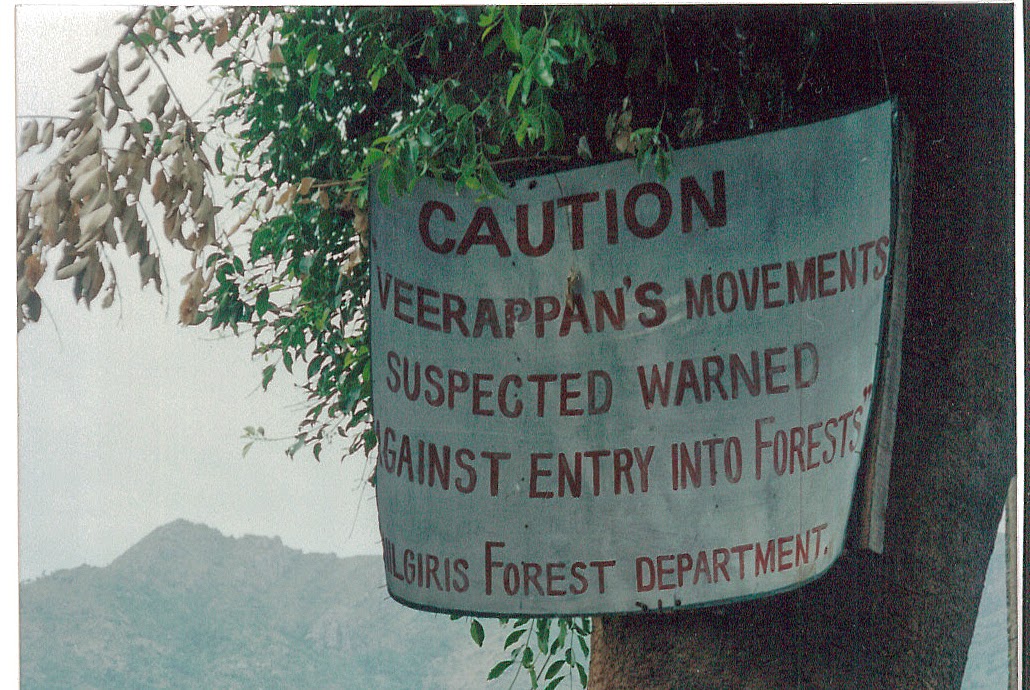
 Not so long ago, this alert was tacked onto a tree just beyond Mudumalai.

Thursday, 25 September 2014

LADAKH THROUGH THE VIEWFINDER


Our guest blogger Sheila Kumar, copywriter-turned-journalist-turned writer (author of Kith and Kin), recounts through a series of frames, her visit to Ladakh — after 29 years. Drop by Sheila's blog Bindersfullawords. And now, over to Sheila....

All photographs by Sheila Kumar

Ladakh was my 'honeymoon posting'. I went there immediately after marriage, to join my Army officer husband who was then stationed in a remote area east of Leh town. At the time, it was just the Army and its kin milling around this fantastical moon desert, and Ladakh struck me with the force of a meteor. I drank in everything I saw around me, and promised myself I would be back. Twenty-nine years later, I was. The magic was intact.

Monday, 1 September 2014

ARTISTS VILLAGE OF ORISSA — DANDASAHI


Art is everywhere. Even wedding invitations are painted on the walls of homes.
Dandasahi — it has an artistic lilt as it rolls out of your mouth. Apt!  Dandasahi is an artist’s village in Orissa. Lesser known than its famous cousin, the Raghuajpur artist village — the latter is prominent on the tourist-map of Orissa while Dandasahi is more of a dot on the map. 

Native art on the walls of an underpass. 

What's striking about Orissa, the land on the Eastern coast of India, is its natural beauty and ART. Native art follows you everywhere — starting from the airport arrivals. You cannot miss it. It is there on the walls of the underpass, on the sidewalks, on lanes and bylanes. People here seemed to have descended upon this earth with an extra artistic- gene. 
The wall outside Shilpa Guru Ananta Maharana's house

So, when I was told about Dandasahi, I wasn't surprised. An artist’s village conjures up images of pretty houses with painted flower boxes on the window sill, set in a beautifully laid-out environment — effects of Hollywood films! Unlike such stereotypical artist villages, which exist within a controlled-environment created by urban minds, Dandasahi is au naturel. It is a rudimentary village which is home to Pattachitra artists from eons — 12th century or before to be precise. And it is a mere half-a-kilometer drive from Chandanpur near Puri; tucked in the midst of coconut grooves on the banks of the Bhargabi River.
The homes are not extravagant, but the art is

Narrow tarred roads flanked by trees, shrubs and small houses on either side lead to what is essentially a one-road Dandasahi village. There’s more vegetation here than houses and more goats than people — or at least that’s what it seemed like. Total population: 150

Colours used are made out of natural materials 
On the day I went to Dandasahi, it was raining. I don’t know whether the grey weather made the village seem cloaked in gloom or it was the coat of impoverishment worn by the village. The houses that speckle the village are small, dark one or two room tenements. There are no signs of opulence in any form — maybe a two-storeyed house, with a looming embellished wrought iron gate, here and there. But...you find a different form of richness — in abundance — here. ART. It peeks at you from every nook and cranny.
The homes are decorated with native art.


A two-storeyed house.
A rare sight in the village
Art is everywhere —  on the walls, windows, doors, floor, on the threshold, on the footsteps and any space that can be turned into a canvas. Every aspect of the people’s lives in this village revolve around art. For example, a walk down the lonely road will reveal homes that has just celebrated weddings. How do I know this? The wedding invitation is painted on the walls of the home — ‘so and so weds so and so’. I found it to be utterly charming — not to mention eco-friendly and artistic. People here breathe art the way we Bangaloreans breathe in pollution — it is a way of life for them. And it has been like this for hundreds of years for pattachitra artists’ living in this village. (Pattachitras are paintings on cotton, silk and palm leaves).

My first stop was at the thatched-roofed house of Ananta Maharana, the famous pattachitra artist and recipient of the Shilpa Guru award. The dimly lit room, an artist's workshop of sorts, is occupied by a battered wooden table covered with precious paintings in various stages of completion. It’s the artist’s table  — there were a couple of artists sitting 'on' the table and around it — bent over treated paper and drawing painstaking lines and circles with brushes dipped in paints made out of natural materials  — just like how their ancestors had done before. Nothing has changed much in Dandasahi since the 12th century, except for the dim electric bulb hanging  overhead and the paved road outside the door; the technique used to create pattachitra today is the same as it had been hundreds of years ago.


Artist at work in Shilpa Guru Ananta Maharana's house
First, for the base of the painting, two cotton fabric pieces (“Used cotton saris are the best,” says Vikram Singh, grandson of Maharana) are prepared by coating it with glue made out of tamarind seeds and white chalk powder. This is allowed to dry for a few hours. Then it is coated again with soft white stone powder and tamarind gum. This gives the cloth tensile strength; it is then smoothened with round pebbles making the surface smooth and a semi-absorbent surface, allowing it to accept the paint. The paint is made out of natural materials — vegetables, earth and mineral sources. The colours used predominantly in pattachitra are are black, red, yellow and green. Black colour is obtained from the black of wick-burning lamps; yellow from haritali stone and red from the hingal stone. White colour is obtained by crushing, boiling and filtering shells. Earlier, the artists didn’t use pencil or charcoal for the preliminary drawings, but now some of them do. Still, most start by making a rough sketch directly with the brush using light red or yellow colour. The borders are painted first. The artist finishes the painting with fine strokes of black brush lines, giving the effect of pen work. Then the painting is held over a charcoal fire and lacquer is applied to the surface. This makes the painting water resistant and durable, besides giving it a glossy finish. The subject matter of the pattachitras are mostly religious, mythological, and folk themes. Krishna leela and Lord Jagannath are recurring motifs.

Shilpa Guru Ananta Maharana
The one-room workshop led to the residence of Maharana  — a humble tenement with a rich intricately painted doorway. Maharana, now well into his seventies, is a frail but extremely skilled man. Sitting in the corner of the room, framed by an artistically embellished window frame, he seemed to be weighed down by dreams unfulfilled.


The room was filled choc-a-block with pattachitras and painted wooden boxes, bottles, coconut shells and others. Maharana’s sons proudly displayed the traditionally painted playing cards or Ganjifa and Chitra-pothies, a collection of painted palm leaves stacked on top of each other and held together between painted wood covers by means of string. The theme was mostly mythological. The life of Krishna has been an inspiration to these artists for eons. They  never tire of showing the works to the visitors. And the guests can never tire of such artistic works. One can buy pattachitras directly from the artists in the village or one can go into town and buy rip-offs for a much lesser price. But even the rip-offs are beautiful. Such is the character of pattachitras.  

Mythology is a recurring theme in Pattachitras.
After spending some time at Maharana’s I walked down the street. Most of the homes are similar to Maharana’s, beautifully painted outer walls, thatched roof, intricately painted doors and window frames; beyond which is darkness punctured with flickering light and the men of the house bent over painting an ancient art. Women help in preparing the canvas, but it is the men who paint — women are not allowed to paint pattachitras. 


The women of Dandasahi 

A regular house in Dandasahi. See the painted walls and door frames

If the art was inspiring enough, the hospitality of the villagers was even more so. They readily open their doors and invite strangers in to share their legacy and livelihood — the patachitra, which is a way of life for them. The only life they know.

Tuesday, 29 July 2014

THE SUN TEMPLE IN KONARK — A HERITAGE SITE

Remains of the Natyamandir. Pic: Nila Tamaraa

The day I went to see the world renowned Sun Temple in Orissa — it rained. As I stood holding an umbrella (which you can rent from the guides and shops out front), the 13th century edifice rose before me, majestically and mysteriously — drenched in rain. 

The main temple. All the four entrances are sealed and sand poured into it to prevent it from collapsing further. Pic: Nila Tamaraa
It was indeed a shimmering Black Pagoda — a moniker bestowed upon it by sailors of a bygone era; men who would sail across the endless Bay of Bengal, in boats big and small carrying spices and dreams; men who would see from the horizon the black Sun Temple rising from the land faraway and know that they were treading the right waves. 

Art, music and love are celebrated here. Pic: Nila Tamaraa
Known as the Konark Temple, the non-believers will tell you that it is one of the most singular achievements of King Narasimha I; and that it took 1200 craftsmen, 12 long years to build it. 

The grounds in which stands the Natyamandir (in the foreground) and the main temple (in the background). Pic: Nila Tamaraa
The believers will say that it was built by none other the son of Lord Krishna. They will also tell you how Krishna was livid when he caught his peeping-Tom-son, sneaking a peek at his stepmother bathing. He cursed him and the young man turned into a leper. The diseased son went to Surya, the Sun God, healer of all ailments (especially of the skin) and pleaded to cure him. Surya did. Konark was Krishna's son's note of thanks to the Sun God.

The basal structure of the dancing hall has women dancers in various dance positions. Pic: Nila Tamaraa
It doesn't matter which story you believe in, but what you cannot deny is the breathtaking magnificence of this once functioning temple and now, the most celebrated ruins in the world. 

Intricately carved stones speak of a time when the divine was not separated from the celebration of life. Pic: Nila Tamaraa
As my bare feet walk the grounds, if I stand still for a moment, I might — if I want to — feel the reverberations of a life gone by; hear the sound of dancing feet adorned with anklets; the melody of music; echoes of laughter and the hum of devotion. For in this temple was worshiped God, art, music, love and life — it is evident in what remains and what has been lost. 
  
One of the seven galloping stone horses. Pic: Nila Tamaraa 
Konark is built in the form of a huge chariot with 24 exquisitely carved stone wheels, drawn by seven galloping horses. Each horse denotes a day of the week and each wheel the hours of a day. The spokes of the wheels serve as sundials and the shadows cast by these can give the precise time of the day.

One of the 24 wheels. Except for one all the other wheels have been are damaged over time.Pic: Nila Tamaraa
The temple imitates Surya riding his chariot across the skies. It is built in such a way that you find the Sun God, who is in the chariot, in the Sanctum Sanctorum. 


The temple is built on the east-west axis on the path of the sun so that the rays of the rising sun fall on Surya in the main sanctum. Locals believe and when that happens, Surya begins his day, riding the chariot across the skies. 

There are numerous free standing sculptures and shrines inside the temple compound
Konark stands in the middle of a 180m X 260m, now manicured lawn and also filled with rosewood and casurina trees. The sea has now receded. A constant reminder of the vagaries of man against nature. 

No dearth of amorous couples here. Pic: Nila Tamaraa
The main temple consists of the main sanctum (229 ft. high) and a worship hall called the Jagamohan. What remains of Konark are the Jagamohan, some parts of the dancing hall or Natya Mandir and the Mayadevi temple.

Top of the Natyamandir is lost to time. What remains is the basal structure. Pic: Nila Tamaraa
In front of the main temple is the dancing hall or the Natyamandir. This is where the temple dancers used to perform dances in homage to the Sun God. The upper part of the mandir has been lost to time. But the imposing basal structure remains. Here, you will find intricately carved figures of musicians and  women in various dance postures.

Mayadevi temple. Pic: Nila Tamaraa
To the left and behind the main temple is the Mayadevi temple. Adorning this temple, said to have been built for one of the wives of Surya, are many stone sculptures of passionate couples.

Pranala (outlet for the sacred oblations) in the form of a crocodile. Mayadevi Temple. Pic: Nila Tamaraa
At the entrance of the temple are two giant lions crushing a war elephant, which are lying atop a human form. 

Lovemaking of all kinds is celebrated in gay abandon in this temple
Konark is a place where stones speak. If man remains silent, he can hear the verses and the stories. The stones are intricately carved with dancing women, gods, goddesses, humans, animals, and the depiction of 16 different types of kissing and 36 forms of pleasure through amorous couples — dance, music, sex….it was all celebrated here.

Amorous couple carved onto the basal structure of the Mayadevi temple
The temple is built of three kinds of stones — Khondalite, Chlorite and Laterite. It is said that these stones are also the reason for the destruction of the temple since Khondalite stones are affected by the saline in the air.

Intricately carved spokes of the wheels
In 1626, the then king of Khurda, Raja Narasimha Dev, son of Purusottam Dev, took away the Sun image to Puri along with two other moving deities - Sun and Moon. Now they are found in a temple in the compound of Puri Jagannath temple.

An orgy carved onto one of the wheels
During the British rule, steps were taken to conserve the ruins. To save the Jagmohan from collapsing, the four entrances were permanently closed, and the interior was filled with sand vertically from the top by drilling a hole and pouring sand through a funnel. The process took three years to complete — from 1901-1904. In 1984 the Sun temple was given World Heritage site status by UNESCO

One of the facades of the main temple

Reaching Konark
From Bhubaneswar airport, Konark is 65 kms.From Puri it is 33 kms. A little more than an hour's drive through picturesque scenery.


Monday, 28 July 2014

FROZEN FRAMES

Nothing like a good scrub and a soak. At Bannerghatta National Park, Bangalore

Tuesday, 15 July 2014

FROZEN FRAMES: PURI, ORISSA

Photo: Sudha Pillai. Shooting the shooter. This was shot at Puri, Orissa. In the background is the iconic temple of Lord Jagnnath of Puri

Tuesday, 1 July 2014

BOGOTA, COLOMBIA

Photo: Vinay Satyan.
Deepti Tarakanath (in the pic - right), director, SHIFFT Films says: "This is a picture of my son Ahan and myself  in one of the many graffiti-splattered lanes on the way to Plaza de Santander in downtown Bogota, Colombia. Every little bit of this area is rich with art, stories and colour." 


Tuesday, 24 June 2014

MILLENNIUM BRIDGE - LONDON


Photo: Laxmi Hariharan.  Author and writer Laxmi Hariharan says, "I took this photo while walking along the Southbank, London.  The Millenium bridge on the South Bank always reminds me of the Bandra-Worli sea link in Mumbai. Both iconic structures with breathtaking views — like this one."

Tuesday, 17 June 2014

COFFS HARBOUR, AUSTRALIA


Photo: Deepa Subramaniam.
Deepa Subramaniam, founder of Galerie De'Arts, a contemporary art gallery in Bangalore says: "This is a fabulous quaint little town called Coffs Harbour in the north coast of New South Wales, Australia. People usually miss out on these smaller places and head to the better known touristy places. The scenic beauty of this place is breathtaking, not ot mention the casual meandering of kangaroos everywhere. Bliss!" We agree. 

Tuesday, 10 June 2014

EIFFEL TOWER, PARIS

Photo: Vinita Hede Berry. "I always wanted to see the Eiffel Tower and this
picture captures my excitement when I saw it," says Vinita Hede Berry, proprietor/
designer at Le Couturier, Bangalore, India. The Eiffel Tower is an iron lattice tower
located on the Champ de Mars in Paris. It's named after the engineer Gustave Eiffel,
whose company designed and built the tower in 1889. It has three floors and is 1063 ft.tall.

Tuesday, 3 June 2014

THE ART GALLERY OF ALBERTA, EDMONTON PROVINCE, CANADA

 The Art Gallery of Alberta, Edmonton. AGA is a 85,000 sq ft art gallery founded in 1924.  But the
 current building was designed by Los Angeles architect Randall Stout. The building itself is a  piece of art with angular
 windows juxtaposed against 190 mts steel ribbon that represents the flowing  form of the North Saskatchewan
River and Aurora Borealis. The gallery has 30,000 sq ft exhibition  space and over 6000 objects. There is also
an art education centre, a resto lounge, theatre and  art rental and sales gallery.

Tuesday, 27 May 2014

CALANGUTE BEACH, GOA

Photo: Prashanth Vidyasagar.  At Safil's shack in Calangute beach, Goa. Calungute beach is the largest and the most popular beach in North Goa. This seven-kilometer beach is known as the Queen of beaches. Its seashore is lined with shacks that serve some of the most delicious sea food on this side of the Ocean.